A pénzügyi intézmények egyre inkább ki vannak téve a saját környezetükön kívülről érkező, nagyszabású kibertámadásoknak, amelyek során egyetlen biztonsági rés is több száz szervezetet érinthet. Egy nemrég történt zsarolóvírus-támadás során a támadók hozzáfértek és elloptak több mint 70 bankhoz és hitelszövetkezethez kapcsolódó érzékeny fájlokat, ami akár 1,3 millió embert is érintett; ez jól rávilágít arra, hogy a késedelmes észlelés és a korlátozott átláthatóság hogyan fokozhatja gyorsan a kockázatot az egész pénzügyi szektorban.
Miért a hagyományos Sandboxalapú SOC-k nem tudtak lépést tartani
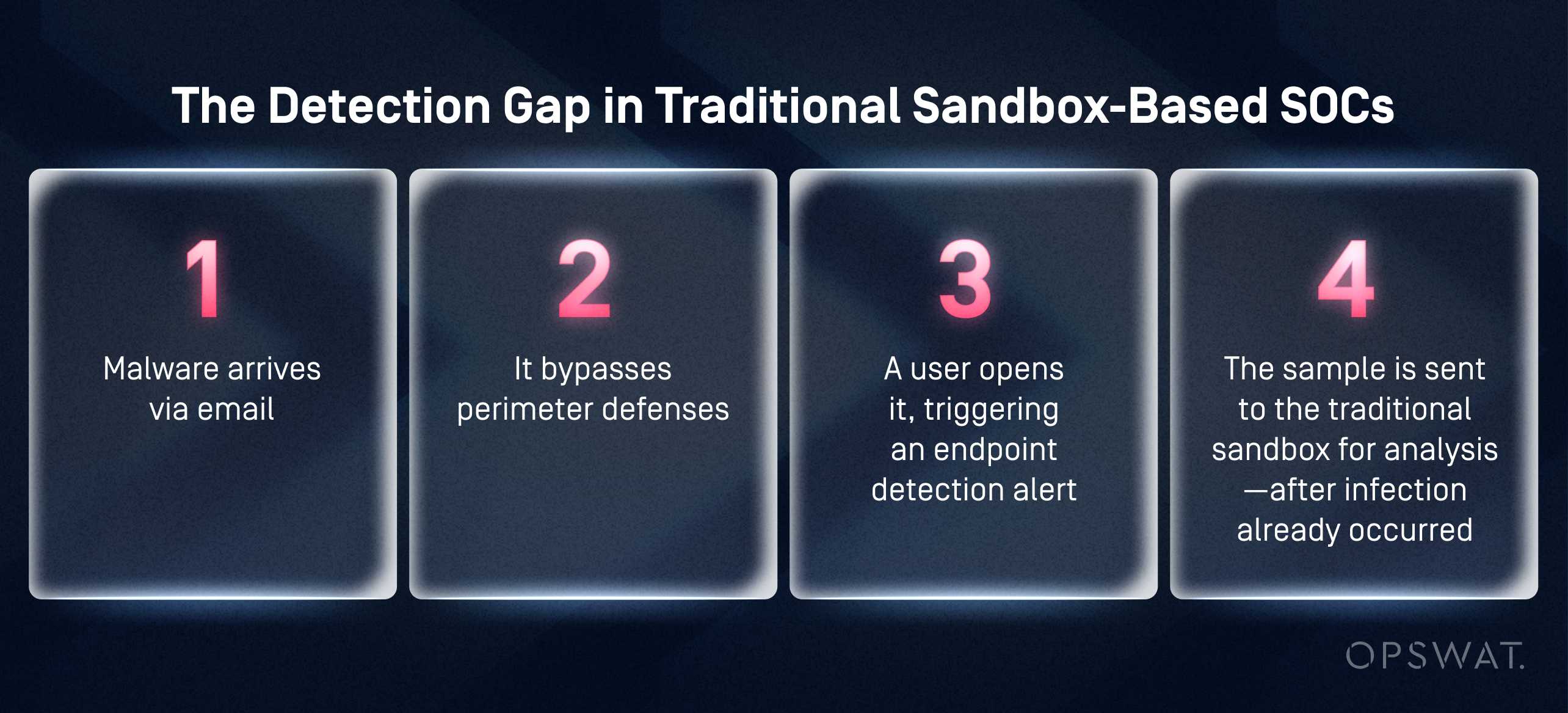
Ennél a pénzintézetnél sandboxing hagyományos sandboxing , mivel az észlelés túl későn történt. Endpoint csak a kód végrehajtását követően indítottak el elemzést, ami növelte a kockázatot, a reagálási költségeket és a szabályozási kockázatot. A CISO számára ez azt jelentette, hogy az ismeretlen fenyegetések még a megerősítés előtt eljutottak a felhasználókhoz, ami tartós rést hozott létre az észlelés és a megelőzés között.
A SOC számára a méret jelentette a kihívást. Naponta közel 1 000 gyanús e-mailt továbbítottak egy virtuális gépen (VM) alapuló sandbox keresztül a SOAR-automatizálás sandbox . Minden egyes tesztelés jelentős időt és számítási erőforrásokat igényelt, ami állandó várólistákat eredményezett, amelyek lassították a vizsgálatokat és meghosszabbították a reagálási időt.
Amikor magas prioritású incidensek merültek fel, az elemzők kénytelenek voltak felfüggeszteni vagy lemondani az automatizált feladatokat, hogy felszabadítsák sandbox . Az automatizálás így nem a folyamatok felgyorsítója, hanem inkább gátló tényezővé vált, ami miatt a SOC reaktívvá vált, túlterhelt lett, és képtelen volt megakadályozni a fenyegetéseket, mielőtt azok elérték volna a végpontokat.
Hogyan változtatta mega „ OPSWAT ”MetaDefender Aether ™ a „ Zero-Day ” felismerését balra
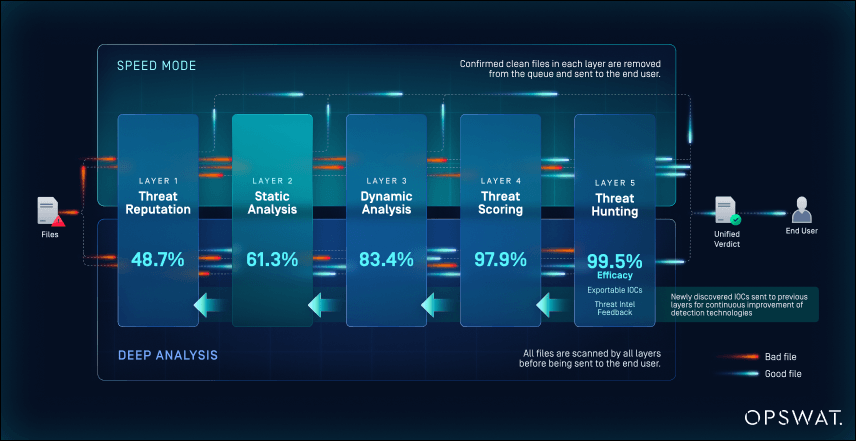
A szervezet a SOC-kal és a kockázatokkal kapcsolatos kihívásait úgy oldotta meg, hogy a virtuális gépen alapuló „ sandbox ” rendszerét a OPSWATáltal kínált MetaDefender Aether megoldásra cserélte. Ez egy egységes zero-day észlelési megoldás, amely egy öt rétegből álló folyamaton alapul, magában foglalva a fenyegetések hírnevét, a végrehajtás előtti statikus elemzést, az utasításszintű emulációt, a fenyegetések pontozását és a fenyegetéskeresést. Ez az architektúraváltás lehetővé tette a biztonsági csapat számára, hogy a dinamikus elemzést a SOC-ból a hálózati peremre helyezze át, ahol a fenyegetéseket még azelőtt meg lehet állítani, hogy eljutnának a felhasználókhoz vagy a végpontokhoz.
A hagyományos virtuális gépes futtatással ellentétbenAether MetaDefender Aether a fájlokat utasításszintenAether , így kiküszöböli a virtuális gép indításából adódó késleltetéseket, és csökkenti a virtuális gépek elleni kijátszási technikákra való érzékenységet. Ez lehetővé tette az intézmény számára, hogy a gyanús fájlokat percek helyett másodpercek alatt elemezze, még nagy e-mail-forgalom mellett is.
A végrehajtás három fő célra összpontosított:
1. Perimeter-first sandboxing
Aether MetaDefender Aether az e-mail-biztonsági átjárókban és a fájlbeolvasási pontokonAether , így biztosítva, hogy a gyanús fájlokat a kézbesítés előtt, és nem a végponton történő futtatás után elemezzék dinamikusan.
2. A SOC automatizálásának és méretének helyreállítása
A dinamikus elemzésnek a meglévő SOAR-munkafolyamatokba való közvetlen integrálásával megszűntek sandbox várólistás torlódások, így az automatizált folyamatok az elemzők beavatkozása nélkül folyamatosan futhatnak.
3. Egységesített zero-day
Minden egyes elemzés hozzájárult a MetaDefender Aether beépített fenyegetés-információs folyamatához, amely egyesíti a fenyegetések hírnevét, a végrehajtás előtti statikus elemzést, az emulációs eredményeket, a fenyegetés-értékelést és a gépi tanuláson alapuló hasonlósági keresést, hogy fájlonként egyetlen, megbízható értékelést adjon.
Ez a megvalósítás sandboxing a reaktív incidenskezelési sandboxing proaktív peremvédelmi megoldássá alakította át, összehangolva az észlelés sebességét, a rendszer méretét és a kockázatcsökkentést a szervezet működési és szabályozási követelményeivel.
A SOC-teljesítményre gyakorolt mérhető hatás és a kockázatcsökkentés
sandboxing virtuális gépeken alapuló sandboxing MetaDefender Aether sandboxing lecserélésévelAether zero-day a hálózati peremre való áthelyezésével a szervezet azonnali és tartós működési javulást ért el. Az észlelés gyorsabbá vált, az automatizálás stabilizálódott, és a fenyegetéseket a támadási ciklus korábbi szakaszában sikerült megakadályozni.
MetaDefender Aether által elért mérhető eredmények
| Hatáskör | Mérhető eredmény |
|---|---|
| A SOC automatizálásának teljesítménye | Megszüntettük sandbox lassú, virtuális gépen futó sandbox által okozott SOAR-sorban jelentkező szűk keresztmetszeteket, így az automatizált folyamatok nagy léptékben, folyamatosan futhatnak |
| A vizsgálat sebessége | Az emulációalapú dinamikus elemzés segítségével a fájlok elemzési ideje percekről másodpercekre csökkent |
| Endpoint | Megakadályozta zero-day az e-mailek és fájlok beérkezési pontjain, ezzel jelentősen csökkentve a végpontok megfertőződését és a költséges helyreállítási munkálatokat |
| Az incidenskezeléssel járó munkaterhelés | Csökkentettük a javítást igénylő incidensek számát azáltal, hogy a fenyegetéseket még végrehajtásuk előtt megakadályoztuk |
| Az elemzők hatékonysága | Csökken sandbox kezelésére és az automatizálási korlátok kezelésére fordított idő, így az elemzők a nagyobb hozzáadott értéket képviselő biztonsági elemzésekre és a fenyegetésekre való reagálásra összpontosíthatnak |
| Zero-day és a szabályozási előírások betartása | Az ismeretlen fenyegetésekkel szembeni proaktív ellenőrzés megerősítése, az audit- és szabályozási elvárásoknak való megfelelés érdekében |
Fenntartható Zero-Day modell kidolgozása
A fenntartható zero-day modell megakadályozza a fenyegetéseket, a fájlmennyiséghez igazodik, és csökkenti a biztonsági operációs központ (SOC) terhelését. OPSWAT MetaDefender Aether telepítésével a szervezet proaktív megelőzést valósított meg, helyreállította az automatizálást, és olyan, auditálásra kész megközelítést alakított ki az ismeretlen fenyegetések kezelésére szabályozott környezetekben.
A pénzügyi intézmények számára ez a megközelítés nem csupán gyorsabb észlelést biztosít. Skálázható, auditálásra kész modellt kínál zero-day kezeléséhez, csökkentve ezzel a SOC-csapatokra nehezedő operatív terhelést, és megerősítve a kritikus fájláramlások biztonsági ellenőrzéseibe vetett bizalmat.Aether MetaDefender Aether , hogyan alakíthatja sandboxing modern, utasítás-szintű sandboxing az egységes fenyegetési hírszerzés zero-day mérhető üzleti előnnyé.
Készen áll arra, hogy megvédje kritikus fájlkezelési folyamatait, és még korábban megakadályozza zero-day ?